The Invisible Operator: Why Your Best Work Happens When No One’s Watching
There is a specific kind of quiet that shows up in healthy companies.
It’s the silence at 3:00 AM when nothing breaks.
It’s the absence of a callback from a homeowner because the system you installed simply kept doing its job through the cold snap.
It’s the dashboard nobody screenshots because every moving part did what it was supposed to do.
In startups and trade businesses alike, some of the best work disappears on purpose.
Not because it didn’t matter.
Because it held.
You usually notice it in the companies that feel calmer than they should.
The founder is still carrying a lot.
The team is still moving fast.
The day is still messy.
But somehow fewer things fall through the cracks.
There’s usually someone, or a set of habits, creating that kind of stability in the background.
That work rarely announces itself.
It just keeps the whole thing from drifting.
The Quiet Stabilizer
You see this pattern in strong founders, strong teams, and strong field operators.
Someone is paying attention before the failure becomes visible.
They notice the handoff that keeps getting fuzzy.
The intake process that works on Tuesdays but not Fridays.
The feature request that sounds urgent but solves the wrong problem.
The service business that looks busy from the outside but is quietly leaking margin through missed follow-up, unclear scheduling, or work that depends too heavily on one person remembering everything.
They are rarely the loudest person in the room.
They are usually the one making small adjustments early, while everyone else is still calling it “fine.”
And because they do it well, the business often looks more naturally stable than it really is.
That’s the strange part.
Good operational work tends to erase evidence of its own importance.
The Wiring Behind the Wall
Trade business owners usually understand this immediately.
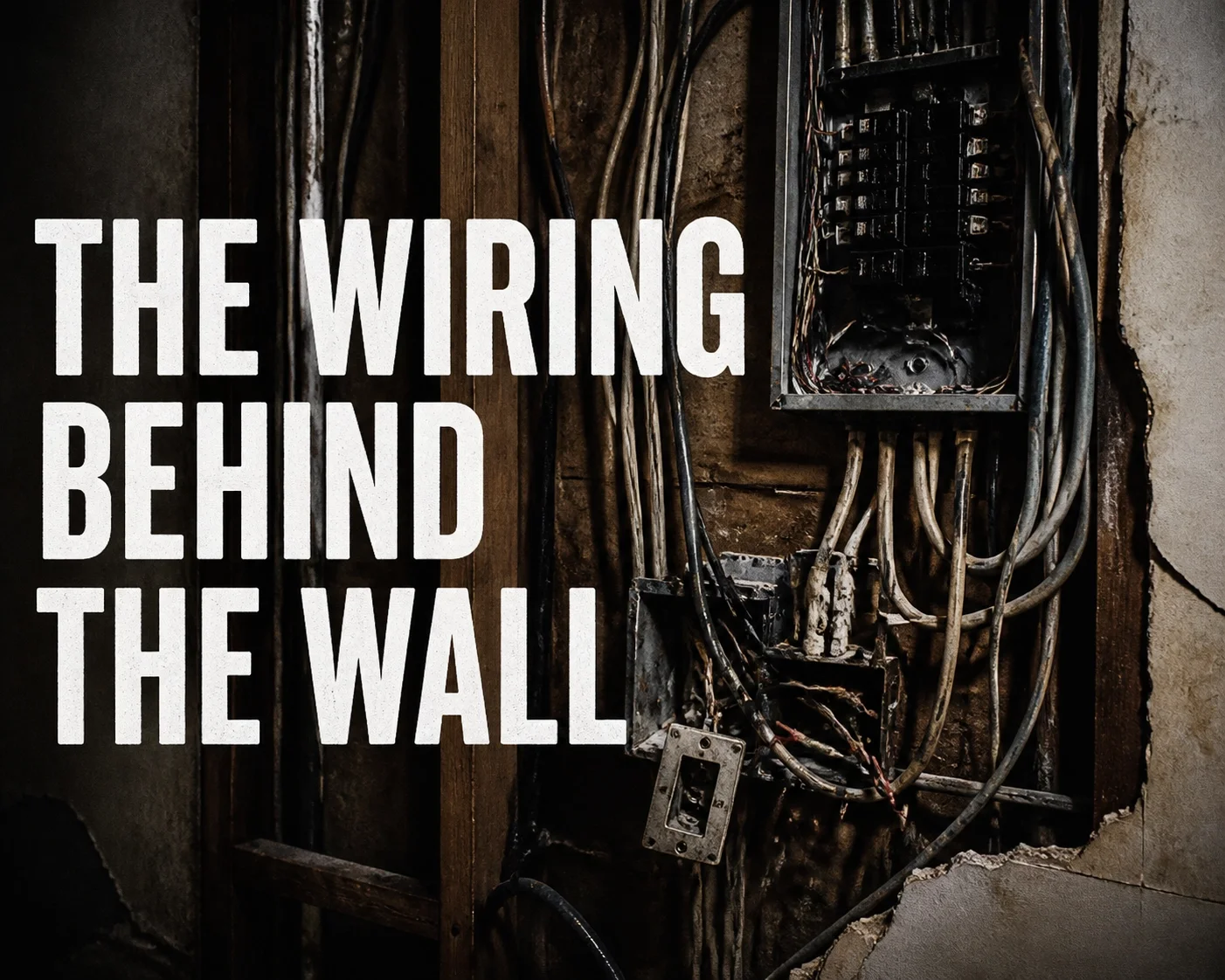
There’s always a moment before the wall closes up, before the panel is sealed, before the customer ever sees the finished result, where the real standard reveals itself.
Not in the polished final photo.
In the hidden work.
The clean run.
The extra check.
The decision to fix the thing that technically could have been left alone.
Once everything is painted and signed off, nobody sees that part again.
But that invisible layer is often the difference between a business people trust and a business people only tolerate.
Startups have their own version of this.
So do field service companies.
From the outside, people see the app, the brand, the booked calendar, the truck, the marketing, the growth.
Underneath it, there’s usually a less glamorous layer holding everything together.
The companies that last tend to respect that layer.
Digital Plumbing: Clean Code and Quiet Systems
In SaaS, the drywall is usually the interface.
People see the product.
They see the launch.
They see the polished homepage and the customer promise.
They don’t always see the architecture underneath, or the operational choices that keep the team from tripping over itself every sprint.
The same thing is happening in home services.
Customers see a booked appointment, a clean install, a technician who arrived on time.
They don’t see the intake flow, the follow-up discipline, the scheduling decisions, or the invisible office work that kept the day from turning into a pileup.
That’s especially true now that more companies are experimenting with AI, automation, and outsourced support layers.
The exciting part gets most of the attention.
The real work is usually in the orchestration around it.
The handoff logic.
The exception handling.
The follow-up nobody remembers until it fails.
The small systems that prevent the $1,000 silence from happening in the first place.
You can feel the difference when a business has this figured out.
The team is still busy, but not brittle.
The founder is still involved, but not chasing every dropped thread.
Customers aren’t experiencing the internal chaos because someone took responsibility for the parts no one brags about.
Trust is Built in the Dark
A lot of trust is built in places nobody celebrates.
Not in the meeting where everyone nods.
Not in the launch post.
Not in the brand language.
In the quiet consistency.
A homeowner doesn’t really buy wires, refrigerant, or a service window.
They buy relief.
A founder doesn’t really buy tickets, ceremonies, or roadmaps.
They buy confidence that the company will keep moving without everything depending on heroic recovery.
That kind of trust usually comes from people who care about the integrity of the whole, not just the visibility of their part.
They are the ones checking the logic twice.
Tightening the process before it snaps.
Cleaning up the handoff before another customer feels it.
Making sure the team can carry the load without needing to become firefighters every week.
A lot of meaningful operating work looks ordinary from the outside.
That’s usually a good sign.
Silence is the Goal
Some of the healthiest businesses have a kind of unremarkable steadiness to them.
Things still go wrong.
People still get tired.
Customers still have needs.
But the company doesn’t feel like it is one missed message away from chaos.
That steadiness usually isn’t accidental.
It comes from founders, team leads, office managers, product leaders, and operators who kept shaping the business long before the pressure became visible.
They built clarity into the routine.
They reduced drag where they could.
They made the business easier to trust.
From the outside, it can look like “nothing happened.”
Inside the company, that often means the right things did.
The Operator’s Reflection
Most businesses have a few places like this.
A backend system everyone works around.
An intake process that “mostly” works.
A follow-up step that lives in somebody’s memory.
A founder carrying too many invisible decisions.
A team doing heroic work to compensate for structure that never got built.
From the outside, it can all look functional enough.
From the inside, it feels heavier than it should.
That weight is familiar in both startups and trade businesses.
Not because the people are weak.
Because the business has grown past what improvisation can comfortably hold.
Usually the next breakthrough doesn’t come from adding more noise.
It comes from strengthening the quiet parts.
The parts behind the wall.
The parts between meetings.
The parts customers never see, but always feel.
Kristie Lemauga is a Senior Product Owner who helps founders turn messy, ambiguous tech challenges into sleek, scalable solutions. She works across SaaS, AI-powered products, and operationally complex service businesses to create calm, scalable execution. Work with Kristie.